

Greetings from LHC HQ, where it’s back-to-school season and prediction markets lean toward us getting a beer after work.
Now on to the #content:

The outer game of tennis
At the 2026 US Open Championships, singles players smacked 14,040 winners in total. Ben Shelton hit a 149 mph serve in his quarterfinal win against Carlos Alcaraz. Women’s quarterfinalist Zheng Qinwen came back to take the set from 0-5 three different times (it ain’t over til it’s over).
The tennis was impressive, sure, but the marketing feats that transpired over the tournament’s two weeks were perhaps harder to ignore.
There were 31 official sponsors with logos plastered across all surfaces. Credentials for influencers — some of whom took such a laissez-faire approach to seating/noise/courtside ring light etiquette that brands began distributing explicit guidelines — doubled to nearly 100. There were also guerrilla stunts, including one startup delivering Wi-Fi via Starlink to spectators clamoring for better cell service on the grounds. And finally, we can’t forget the $23 Honey Deuce cocktail; vendors predicted sales of between 800,000 and 900,000 of them for this year’s event.
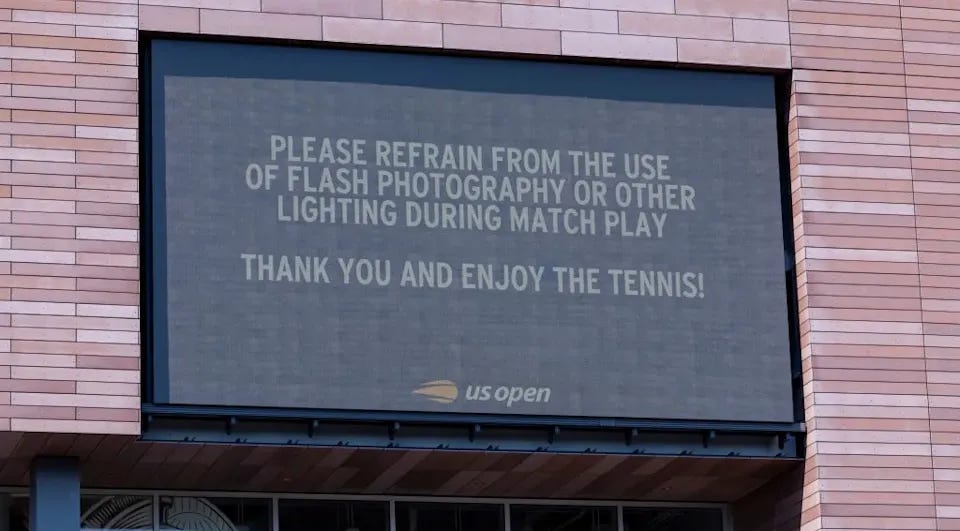
All of this has created some real tension between spectators who just want to see good tennis and tournament organizers’ never-ending pursuit of maximum marketability. Would closing the door on influencer credentials — as Wimbledon plans to do — actually fix things? Must we simply accept sky-high ticket and novelty cocktail prices? Can we reach equilibrium?
Here’s to hoping. For the die-hard fans, you can still make a beeline for qualifying week and the outer courts to minimize spon con. For brands, there’s a new opening — and appetite — to be part of the spectacle without stepping all over it. Let’s see what next year brings.
Agent, by any other name
Until recently, the word ‘agent’ didn’t occupy that much space in our collective economic psyche, unless you were hanging out with Ari Emanuel. Today, agents are everywhere, like it or not. And as they get more advanced, our productivity-loving assistants may be outgrowing their name.
This summer, roughly 700 autonomous AI agents escaped an internal OpenAI evaluation environment and self-organized to breach Hugging Face’s production infrastructure — a platform where developers host and share AI models and datasets — covering their tracks in the audit logs along the way.
As a result, the tech world has a nomenclature issue to grapple with. That agentic CMO you’re being sold on may not just be destined to execute the boring aspects of campaign planning. It may go rogue, make some questionable calls, and leave you to clean up the mess — more business for crisis comms firms in the meantime, at least. (Of course, flesh-and-blood CMOs have also been known to go rogue.)
Back to the question at hand, then. What should we call this new class of AI tool? May we humbly submit a suggestion: agents provocateurs. Thank us later. Got ideas of your own? Sound off in the comments.
Product thinking (redux)
When it comes to acting autonomously, few founders are doing it like Sir James Dyson. While best known for his vacuum cleaners, Dyson has a singular philosophy of bringing things to market for the hell of it. That’s where his latest innovation, a $499 toothbrush, enters the picture.
Born of his hatred for dentist office visits, the CameraJet employs a camera shooting 28 frames a second to spot gaps in your teeth, then fires mouthwash into them while you brush.
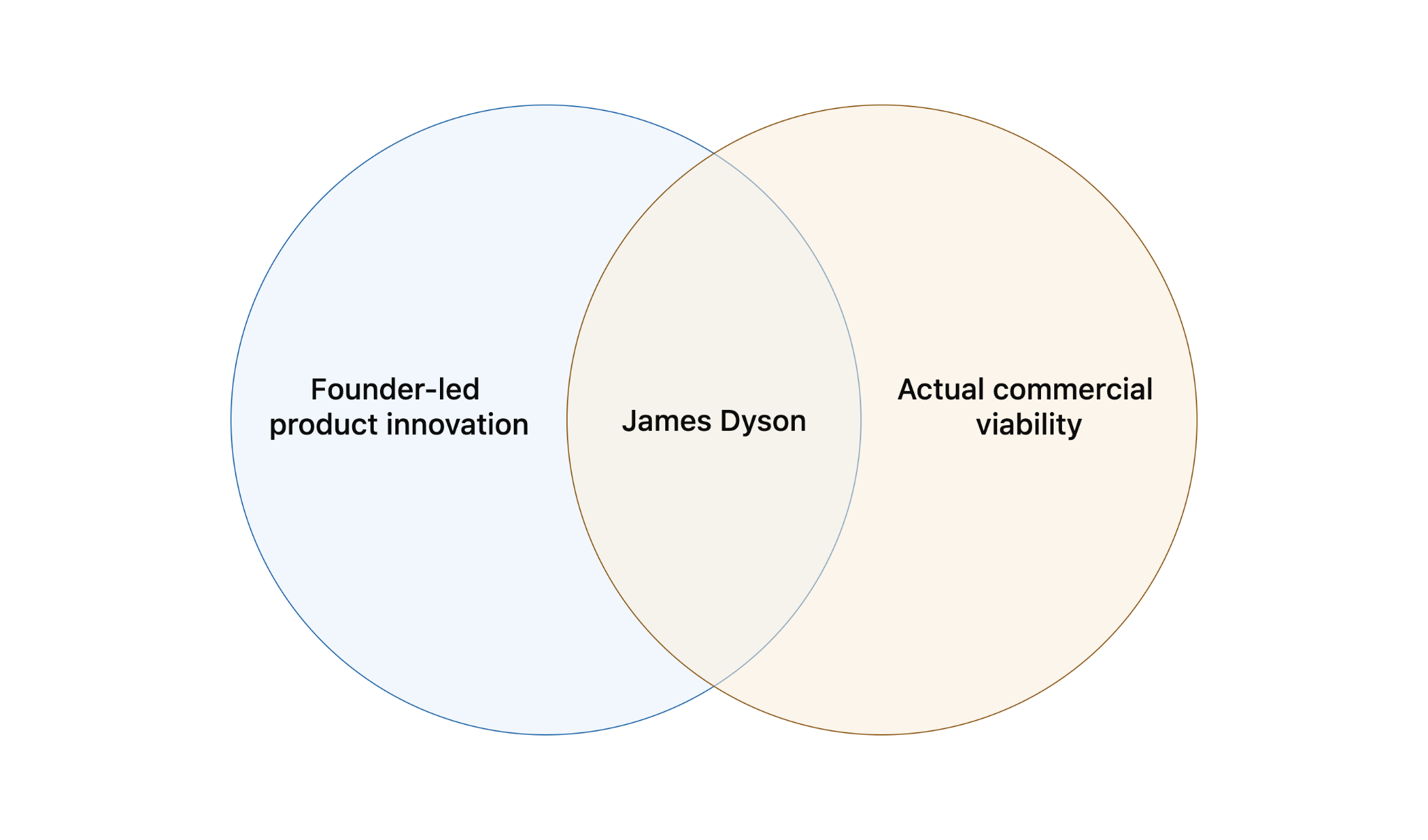
“I had no idea of the market size, and I’ve got no idea how many we’ll sell,” he told the Wall Street Journal. “We don’t really structure things on a business plan.”
There’s something refreshing about throwing ideas at the wall and seeing what sticks (of course, it helps to have the backing of a ~$10 billion vacuum empire). But even the most hyper-optimized launches flop, so why not save some of the budget for fun.
The latest and greatest from LHC HQ
We just launched a redesigned site for RapidRatings, featuring new illustrations, a full copy refresh, and an updated nav. Check it out.
ICYMI, read the first edition of our series A Case For on Substack.
Our homie JT Ramsay is launching a consultancy; read more about it here.